The Girard Foundation granted the use of the designer’s geometric motif.
Projects
Transformation
Ambassaden
Former U.S. Embassy
A Modernist Masterpiece
Reimagining and Restoring the Former U.S. Embassy
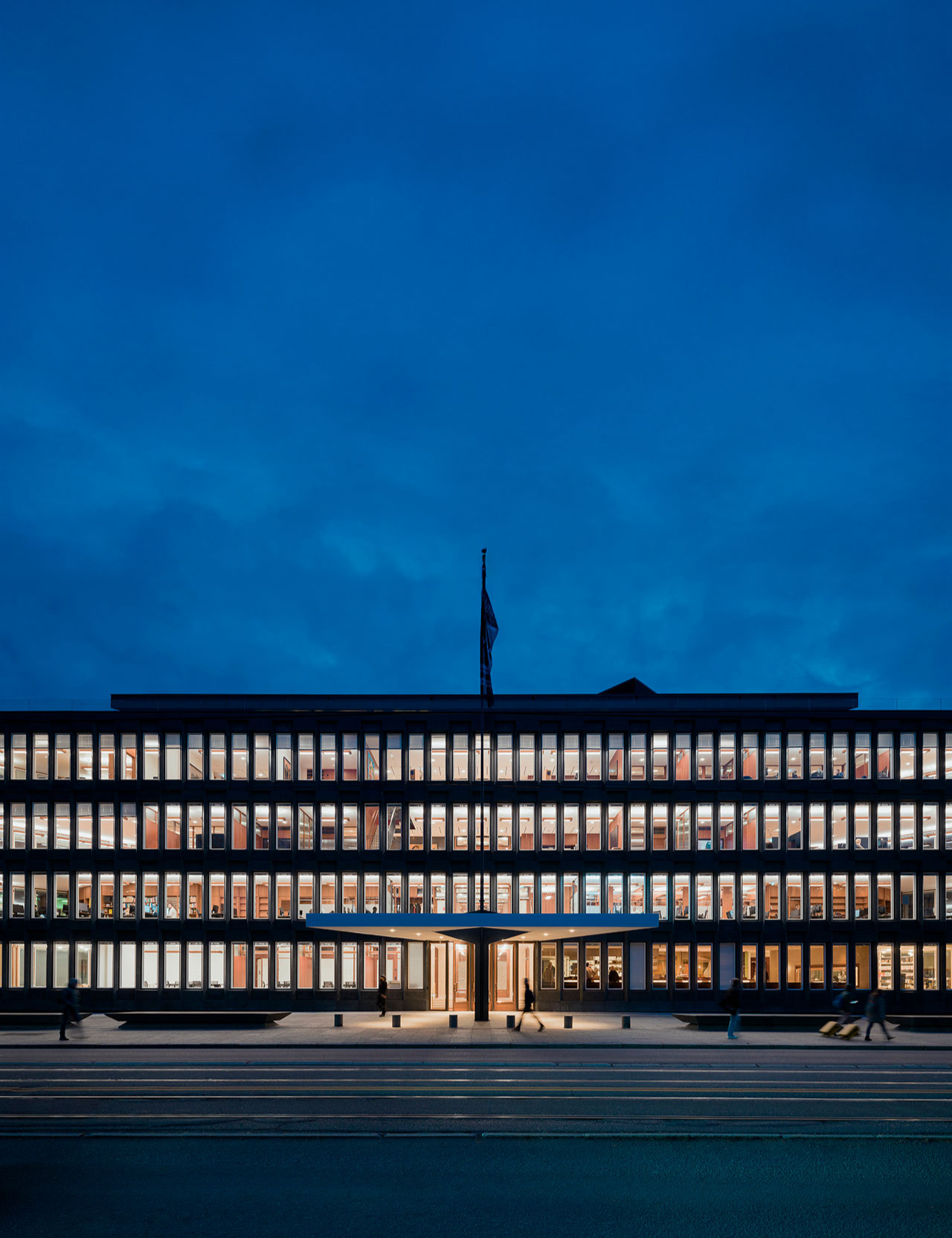
Reimagining and restoring the Former U.S. Embassy. Ambassaden in central Oslo was designed by renowned Finnish-American architect Eero Saarinen in 1959, for years serving as the American Embassy. Back then, the building was a vibrant cultural hub on Henrik Ibsens gate, directly opposite the Royal Palace. Norwegians came here to read American literature, watch Hollywood films and perhaps taste their very first hamburger.
Following the terror attacks of September 11, 2001, access to the site was heavily restricted. Tall fences and heavy security were installed, and the once open and welcoming landmark became a sombre, closed-off presence in the city.
When the American Embassy relocated in 2017, the heritage-listed building was acquired by property investor Fredensborg. We were invited to join the team tasked with transforming the structure into a vibrant cultural and culinary destination – once again inviting the public inside.
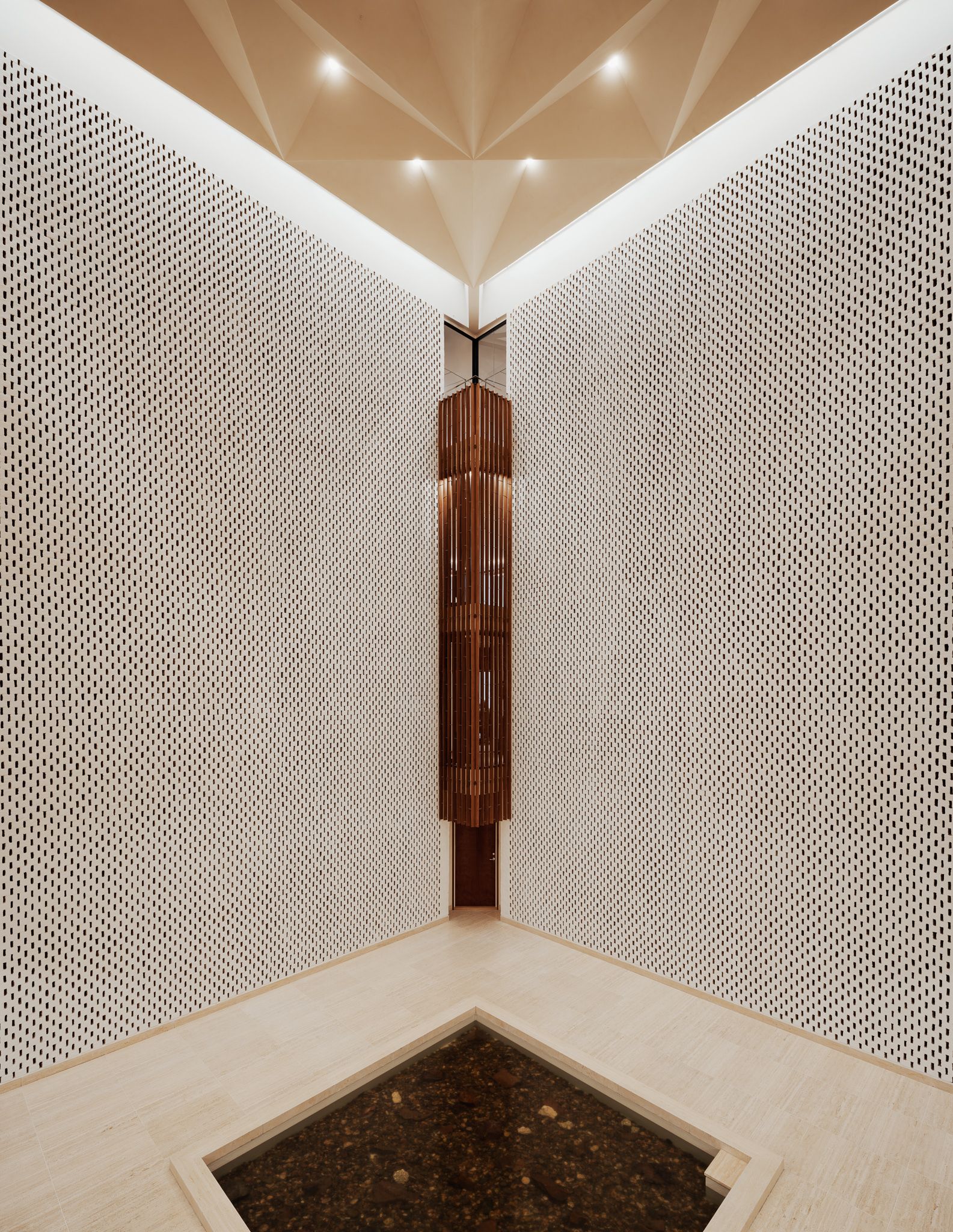
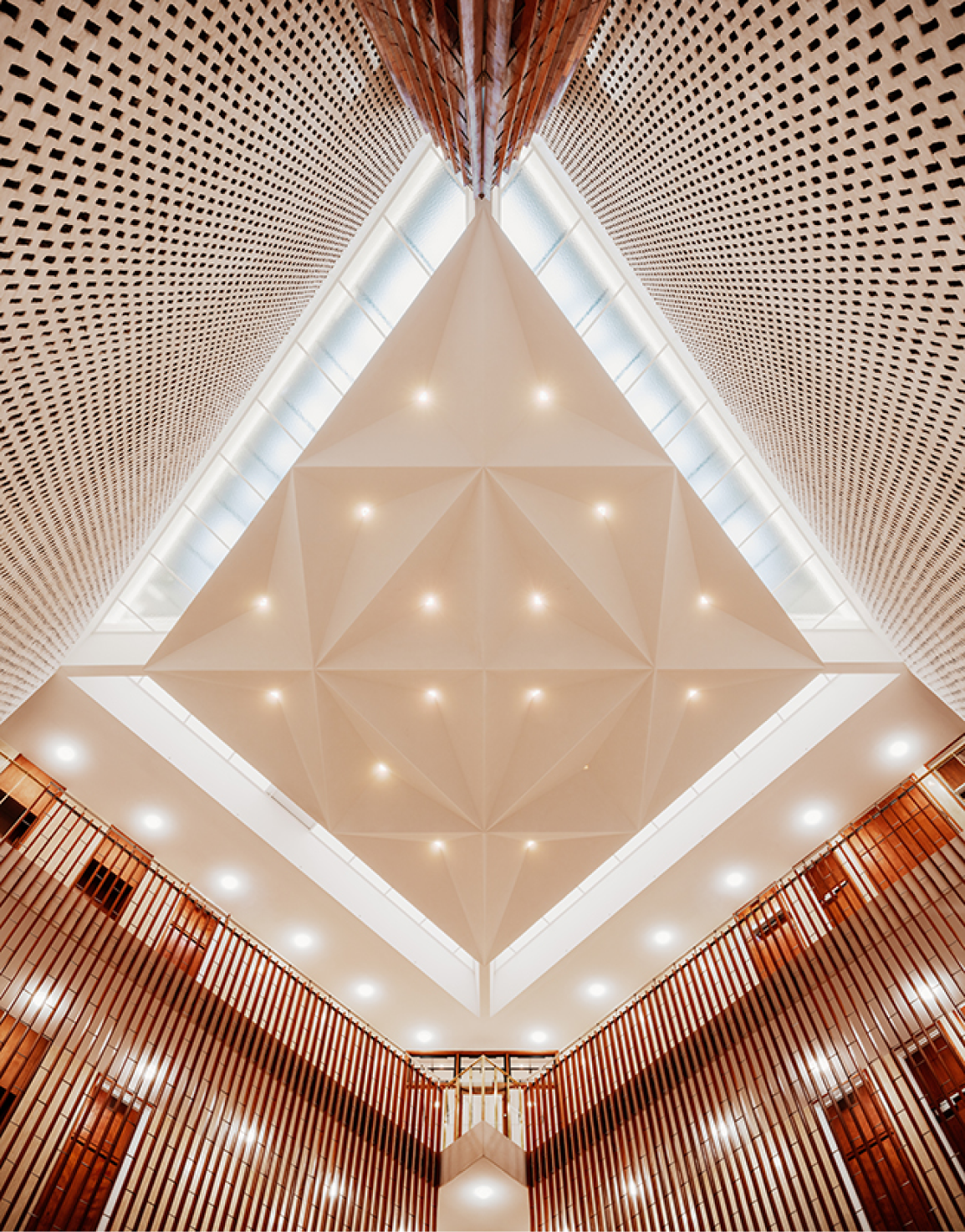


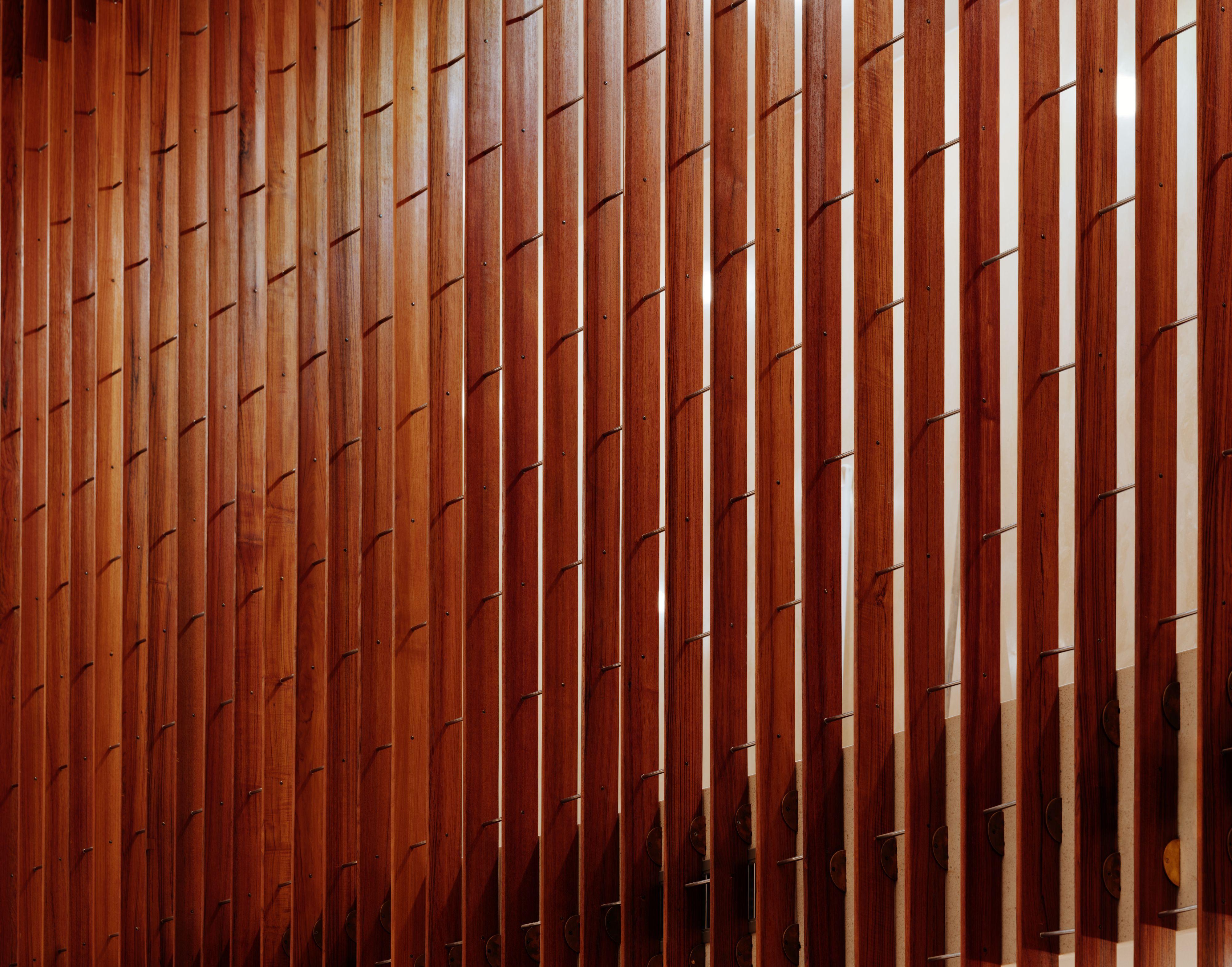
During the embassy years, Saarinen’s iconic building suffered from poor maintenance. A 3D scan of the interiors revealed the true extent of the deterioration, and considerable effort has gone into preserving the building’s original features. All 577 windows were restored, with more than 64,000 screws individually removed, cleaned and reassembled in the process. Over 16,000 linear metres of teak were dismantled, sanded, oiled and reinstalled. In addition, 3,500 truckloads of bedrock were excavated to create expansive event spaces beneath the existing structure.




Guests visiting the Frances wine and coffee bar are greeted by Australian artist Diena Georgetti’s Community of the People / AMBASSADEN (2023) – an artwork initiated by us especially for Ambassaden. The vibrant wall-based mosaic truly defines the space, adding colour to an otherwise restrained palette of wood, brass and pale terrazzo. Each tile was hand-picked, hand-cut and hand-placed by Travisanutto Mosaics in Venice.
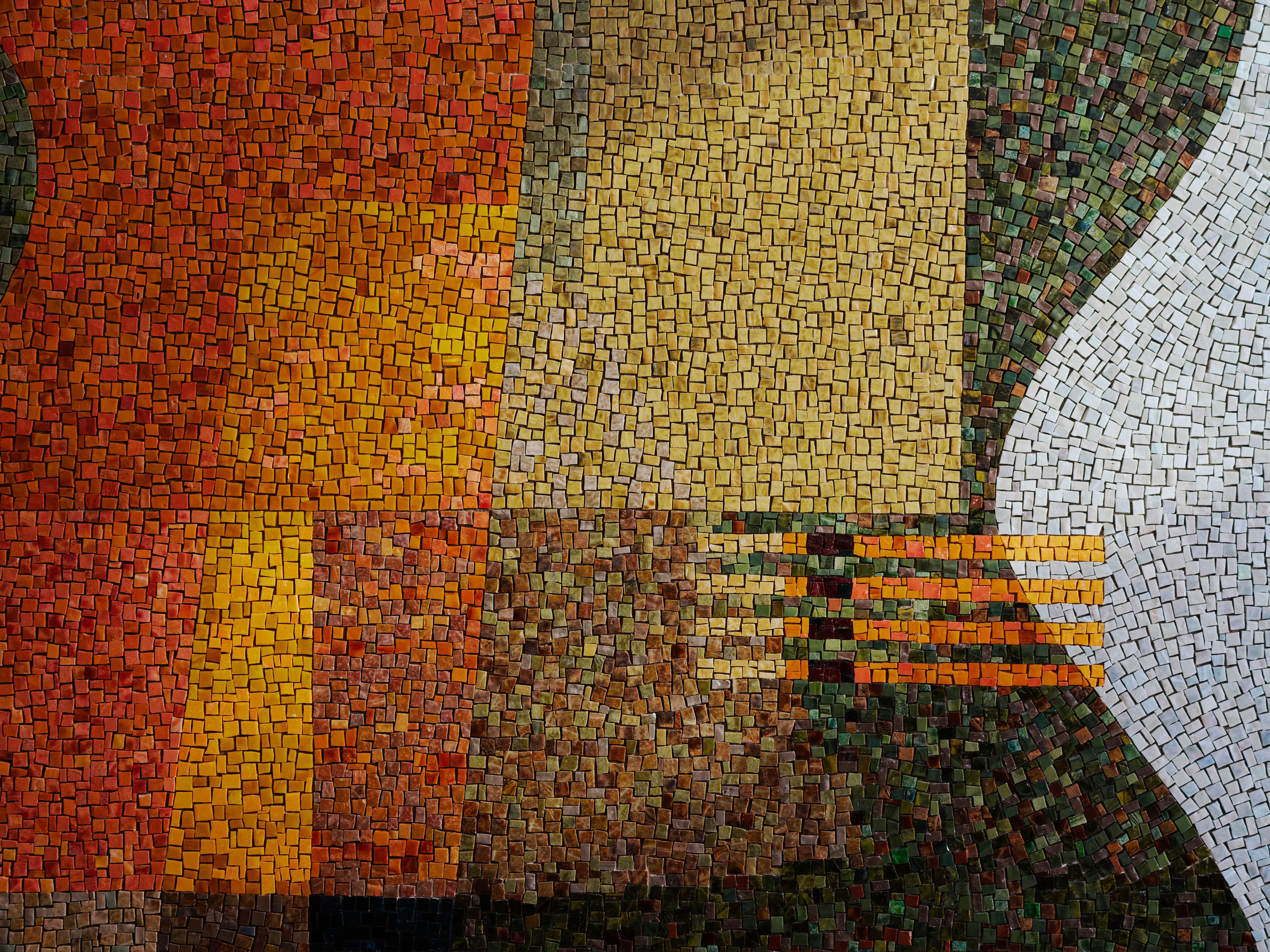
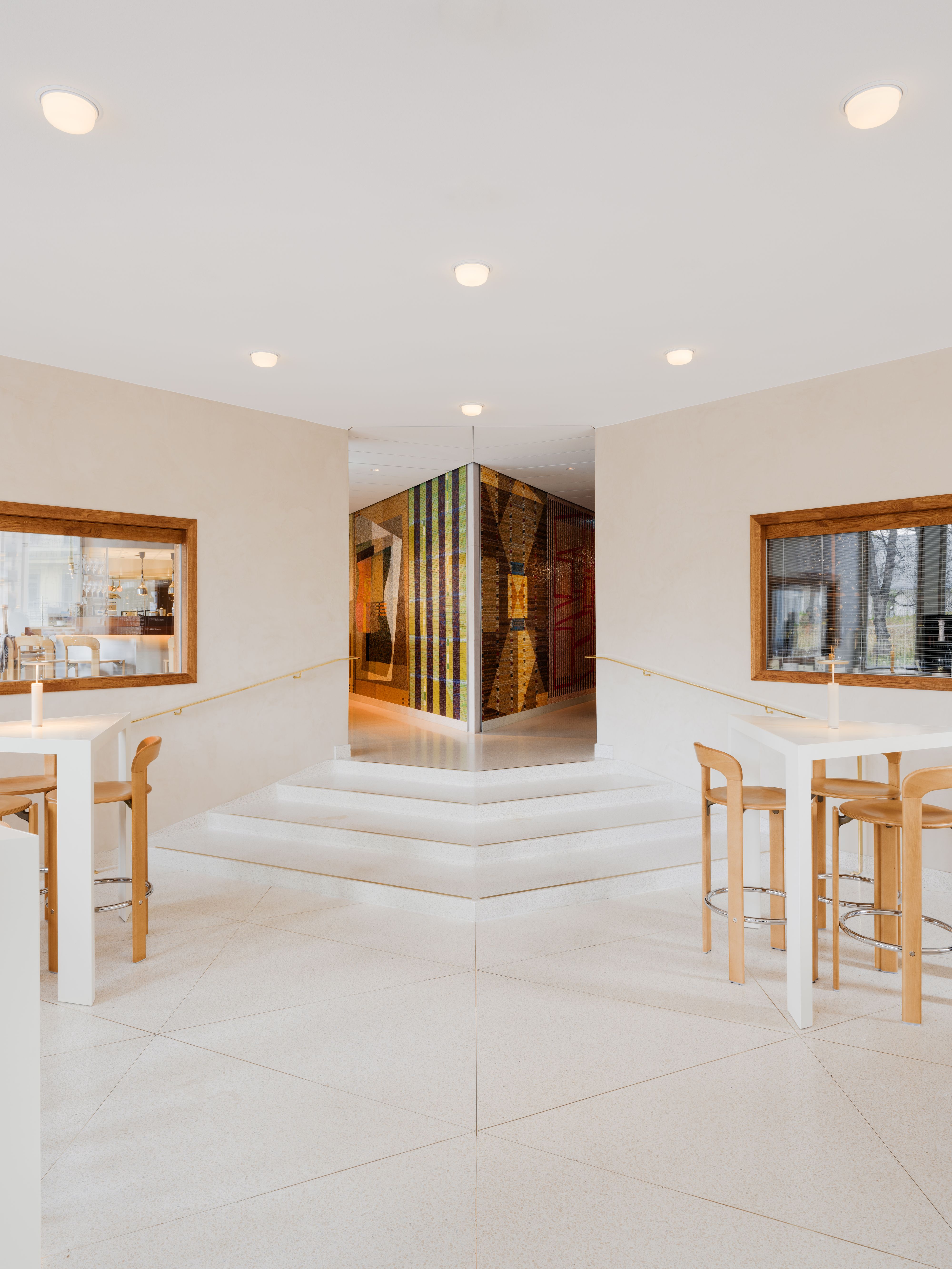
Georgetti’s artwork extends Saarinen’s building in several ways. Mosaics were a common decorative element in modernist architecture, and the material is particularly well-suited to a high-traffic venue such as Frances.


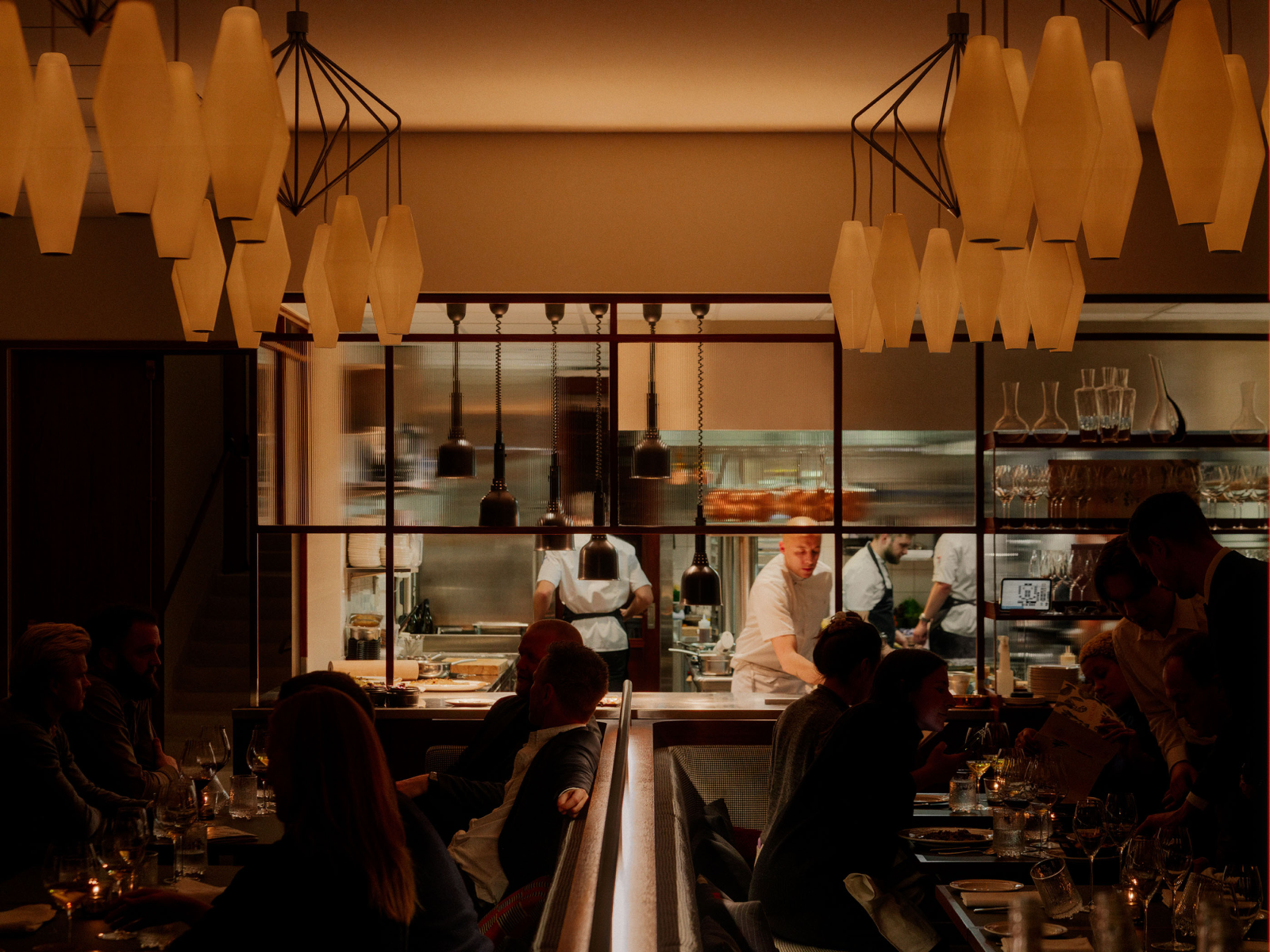
Vinland is an informal brasserie boasting one of Norway’s most impressive wine cellars. We have structured the space into carefully planned zones – bar, sommelier station, dining area, open kitchen – giving the generous room a sense of intimacy. Here, Saarinen’s pendant lights, once designed for the embassy cafeteria, have been reimagined from archival photographs and hand-blown at Magnor Glassverk, casting a soft historic glow over the dining area.
The Auditorium, Vinland’s private dining hall, is a tribute to Saarinen’s legacy. It is the only room furnished with his signature Tulip chairs and tables, designed for Knoll in the 1950s. The hand-tufted black-and-white carpet recalls his description of the embassy as a “black-tie” building and revives his collaboration with designer Alexander Girard: The Girard family granted use of the designer’s geometric motif especially for this project.
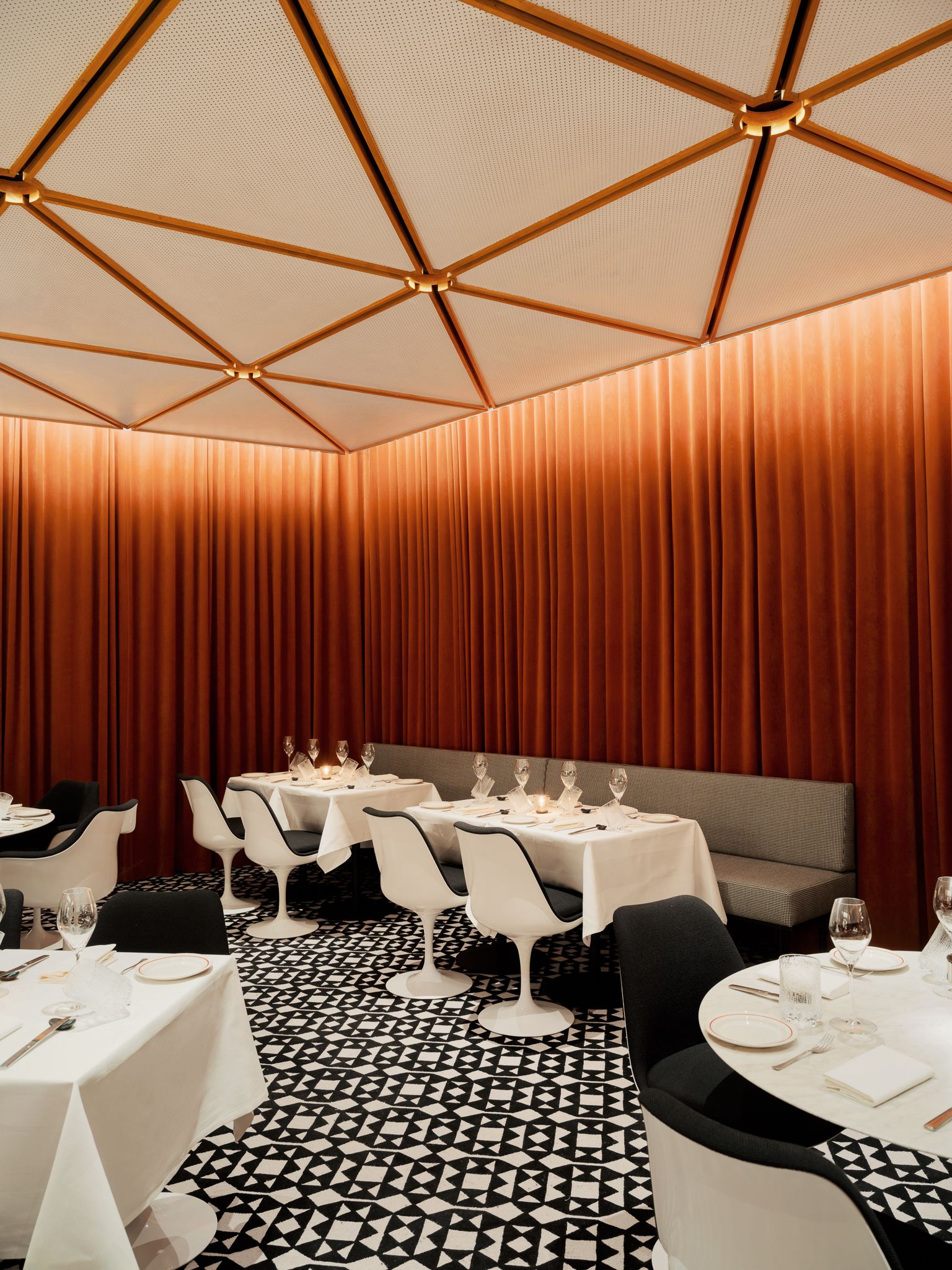
The Girard Foundation granted the use of the designer’s geometric motif.


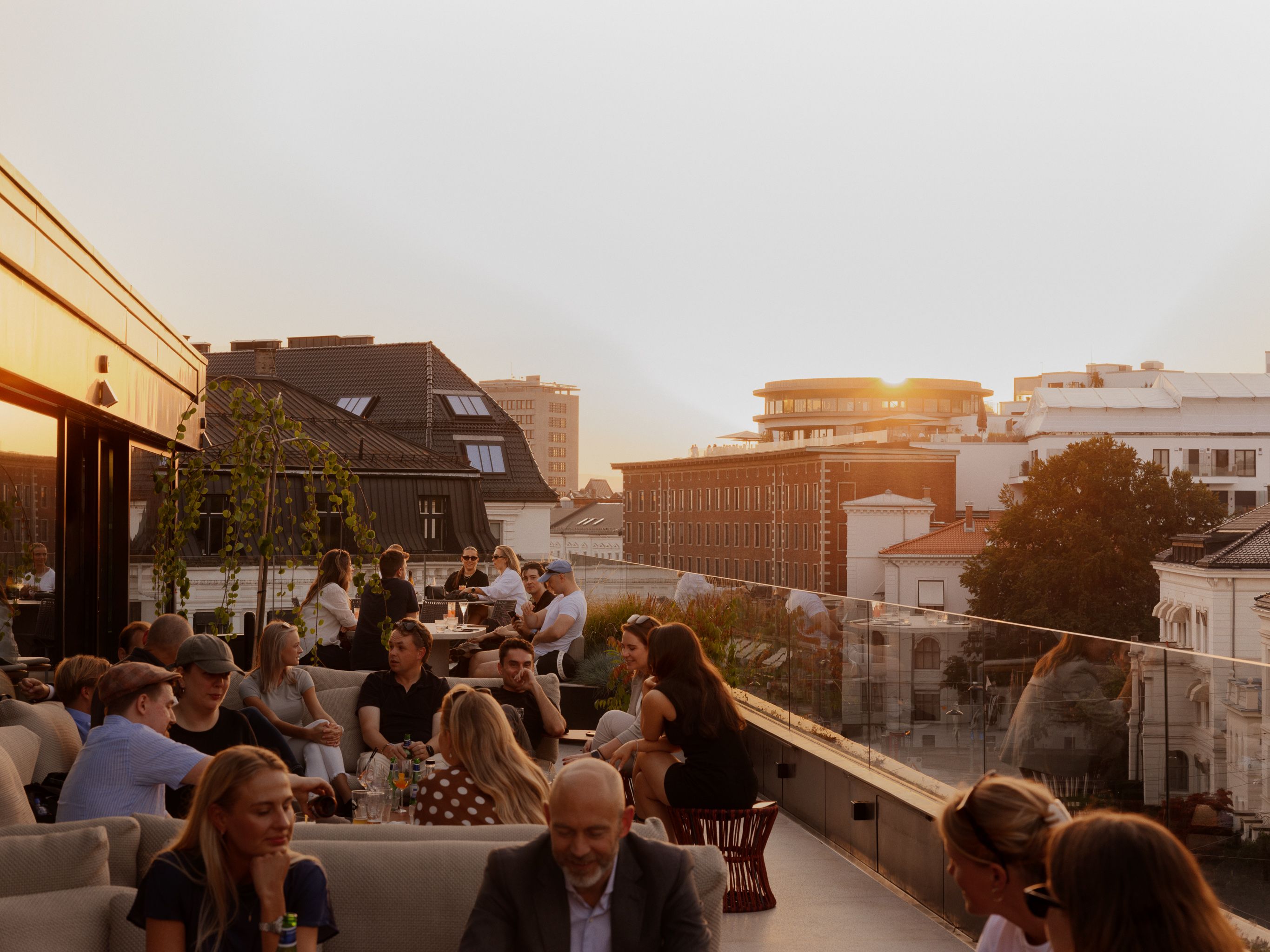
The former technical floor now houses the Eero rooftop restaurant, complete with a panoramic terrace and sweeping city views. The newly excavated basement holds additional event spaces and a state-of-the-art gym. We approached each new addition with sensitivity to its purpose, ensuring that every element integrates with the iconic building’s overall narrative.


Restoring a work by Saarinen is a once-in-a-lifetime opportunity. He was one of the most influential architects of the 20th century, and Ambassaden is one of only three Saarinen buildings in Europe. We had the pleasure of sharing the experience with our client Fredensborg, architects Lundhagem and Atelier Oslo, lighting designers Concept Design, and the skilled builders and craftspeople at Oslo Byggentreprenør and Interiørverkstedet.